
Ski Pants Buying Guide
Choosing the right ski pants isn't always straightforward. Our guide explains the differences between softshell, insulated and shell ski pants, helping you choose the right option for your skiing holidays.
With more than 40 years' skiing experience, we've found that there is no single style of ski pant that suits everyone. The right choice depends on the conditions you expect. Fortunately, a well-chosen pair of quality ski pants will keep you comfortable in a wide range of conditions.
What type of ski pants should I buy?
Most ski pants fall into one of three categories: softshell, insulated or shell (non-insulated). Each offers a different balance of warmth, stretch, breathability and weather protection.
Softshell ski pants
Softshell ski pants combine excellent stretch and comfort with impressive weather protection. Many women's styles have a warm fleece backing, making them suitable for a wide range of skiing conditions. They are also highly breathable, making them particularly comfortable for active skiing.

Insulated ski pants
Insulated ski pants contain a light layer of synthetic insulation between the outer fabric and lining. They provide extra warmth without feeling bulky and offer an excellent balance of warmth, comfort and versatility. Most modern insulated ski pants are also highly breathable, making them suitable for most skiing conditions.
Most of our male customers choose a lightly insulated ski pant.
Shell (non-insulated) ski pants
Shell (non-insulated) ski pants do not contain insulation. Instead, they protect you from wind and snow while allowing you to control your warmth with the layers you wear beneath. They are generally the most breathable option and are often chosen by skiers who naturally feel warm or anyone expecting milder conditions. They are also popular for off-piste skiing, where the extra exertion can quickly generate body heat.
Those who choose a shell tend to understand the benefits it offers in the right conditions.
Getting the right fit
Getting the right fit is just as important as choosing the right type of ski pant. Ski pants should feel comfortable from the moment you put them on, allowing you to bend your knees, squat and move freely without feeling restrictive.
Avoid choosing a size simply because it's the smallest you can wear. The correct size allows insulation to work as intended, gives you the freedom to move comfortably and will usually look better when skiing. A little extra room around the waist also makes for a more comfortable day—especially if you're planning to enjoy a generous mountain lunch!
Where appropriate, we include fit advice on each product page, highlighting styles that come up smaller or more generous than expected.
How long should ski pants be?
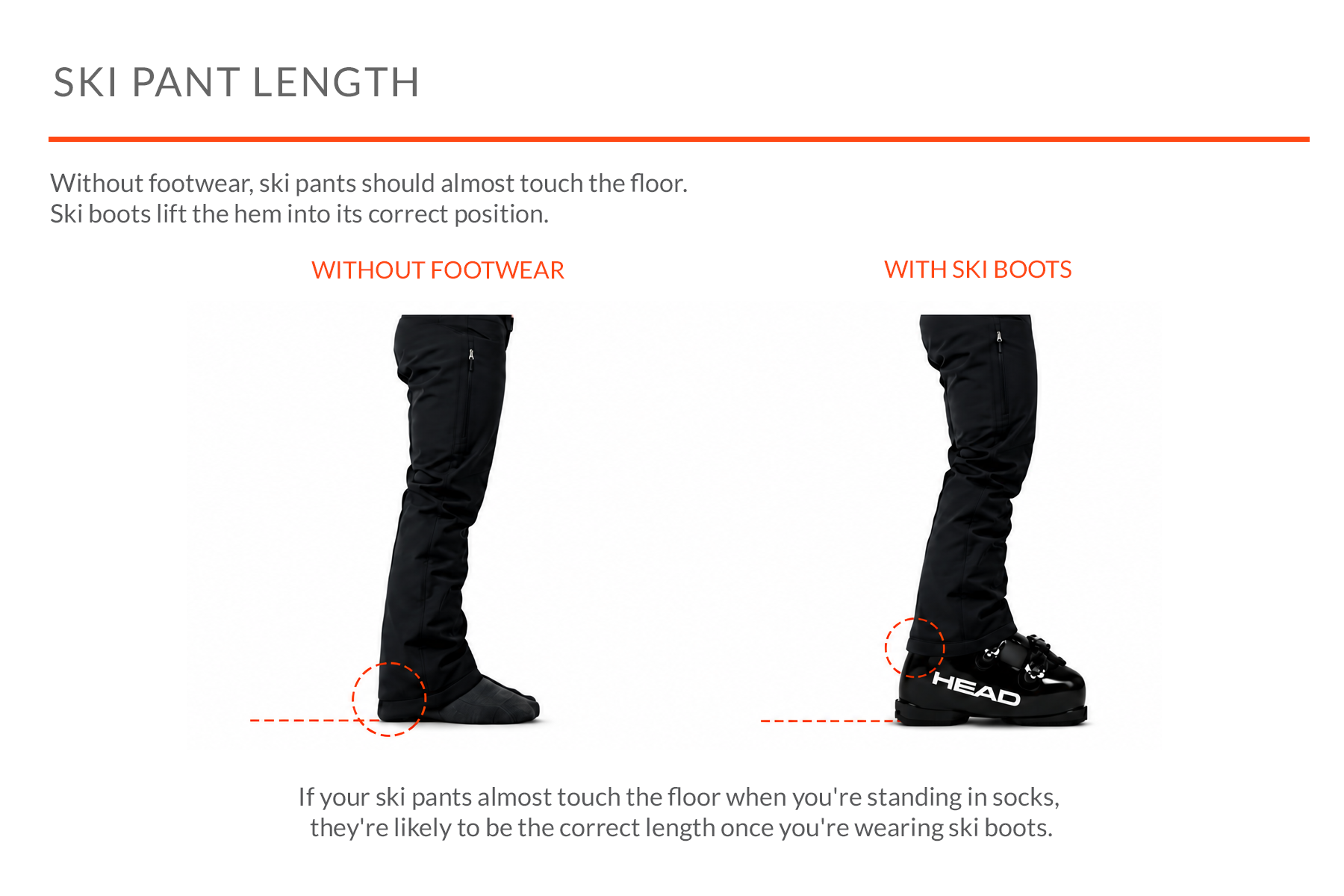
When standing in your socks, ski pants should almost touch the floor. Once you're wearing ski boots, they'll sit slightly above the ground, helping to prevent the hems from dragging or becoming damaged.
Some premium ski pants include adjustable waist tabs or expansion zips to fine-tune the fit – a feature we jokingly refer to as the "lunch zips" in our showroom.
Softshell vs Waterproof Ski Pants
If you're choosing between a softshell and a fully waterproof ski pant, there isn't a right or wrong answer. Both perform exceptionally well, but they offer different benefits.
From a purely technical perspective, a fully waterproof ski pant offers the highest level of protection against wet snow and rain. If you're looking purely at specifications, it's difficult to argue against it.
However, that's only part of the story.
Inspired by the classic stretch ski pants that became popular in the 1960s, many people initially questioned whether premium softshell ski pants would be warm enough or weather-resistant enough. As more women tried them and shared their experiences, confidence grew. Today, they have become one of the most popular choices for female skiers.
The reason is simple. Premium softshell ski pants combine excellent stretch, comfort and breathability with impressive weather protection. They also create a flattering silhouette that many women prefer, while remaining warm enough for the vast majority of skiing conditions.
For days of heavy rain or prolonged sitting on wet chairlifts, a fully waterproof ski pant still has the advantage. But for many women, the improved comfort, freedom of movement and fit make a premium softshell ski pant the one they return to season after season.
Of course, if budget allows, many regular skiers enjoy owning both. A premium softshell ski pant is ideal for most ski days, while a fully waterproof ski pant is reassuring to have for particularly wet weather or prolonged time sitting on wet chairlifts. Having both gives you the flexibility to choose the right ski pant for the conditions, whether you're heading to a high-altitude resort with colder, drier snow or a lower resort where milder, wetter weather is more common.
What should I wear underneath my ski pants?
Most skiers only need a single pair of quality thermal baselayers beneath their ski pants. Modern ski pants are designed to work as part of a layering system, so wearing multiple thick layers underneath can actually make you less comfortable by restricting movement and reducing breathability.
If you're skiing in exceptionally cold temperatures, it's usually better to choose a warmer baselayer or a more insulated ski pant than simply adding extra layers underneath.
What waterproof rating do I need?
Most quality ski pants offer more than enough waterproof protection for the majority of skiing holidays.
It's easy to compare waterproof ratings such as 10,000 mm, 20,000 mm or higher, but these figures only tell part of the story. They are measured under laboratory conditions and don't always reflect how a finished ski pant performs on the mountain.
The quality of the waterproof membrane, garment construction and seam sealing can all have a significant impact on performance. Some manufacturers also quote the waterproof performance of the outer fabric rather than the finished garment, making direct comparisons difficult.
For most skiers, we believe it's more important to choose a well-made ski pant that's suited to the conditions you expect than simply chasing the highest waterproof rating.
Caring for your ski pants
Modern technical ski pants are designed to be washed, but only when they genuinely need it. In general, the fewer times you wash your ski pants, the longer they're likely to last.
Always follow the care label, but remember that the maximum wash temperature isn't always the best choice. If your ski pants are only lightly soiled, a cooler wash can help protect the fabrics and colours. Avoid using fabric conditioner, as it can reduce the performance of technical materials.
Over time, the durable water repellent (DWR) finish may begin to wear away. If water no longer beads on the surface of the fabric, it may be time to wash and reproof your ski pants using suitable technical garment care products.
Proper care will help maintain the performance, appearance and lifespan of your ski pants.
We hope our guide has helped you understand the different types of ski pants and how to choose the right pair. If you have any further questions, please get in touch—we're always happy to help.
© White Stone. Buying Guide.
Based on over 20 years of fitting premium ski wear and more than 40 years of skiing experience.